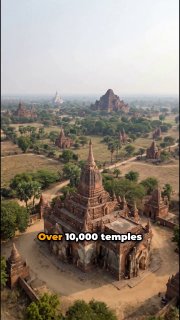
Along the Irrawaddy River in Myanmar, on a plain of just forty square miles, an ancient kingdom raised more than ten thousand temples, pagodas and monasteries — and then mysteriously collapsed.For over two hundred years, kings and wealthy families competed to build. Most of the temples were made of brick, the tallest rising about two hundred feet, and many still hold wall paintings over eight hundred years old. Even after centuries of earthquakes, more than two thousand are still standing today, spread across the horizon in every direction.Here's the strange part: temple-building actually peaked as the kingdom was falling apart. The old story blames invading Mongols — but some historians now argue the Mongols may never have reached Bagan at all. The real killer may have been the temples themselves. Many were granted tax-free farmland, and by one estimate, by the year 1280 a full third of Upper Myanmar's farmland paid no taxes. The kingdom may have literally donated itself into ruin, pouring its wealth into monuments until the treasury ran dry.Did you know? 🎓
Along the Irrawaddy River in Myanmar, on a plain of just forty square miles, an ancient kingdom raised more than ten thousand temples, pagodas and monasteries — and then mysteriously collapsed.For over two hundred years, kings and wealthy families competed to build. Most of the temples were made of brick, the tallest rising about two hundred feet, and many still hold wall paintings over eight hund...