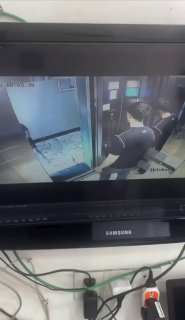
🇺🇸 #Chicago.
🇺🇸 #Chicago. What do you think these lovely Chicagoans are fighting over? It was a preposterous argument over aerospace engineering and technology advancements in modern times... or the last chicken wing.Follow us -> LiveLeak
🇺🇸 #Chicago. What do you think these lovely Chicagoans are fighting over? It was a preposterous argument over aerospace engineering and technology advancements in modern times... or the last chicken wing.Follow us -> LiveLeak
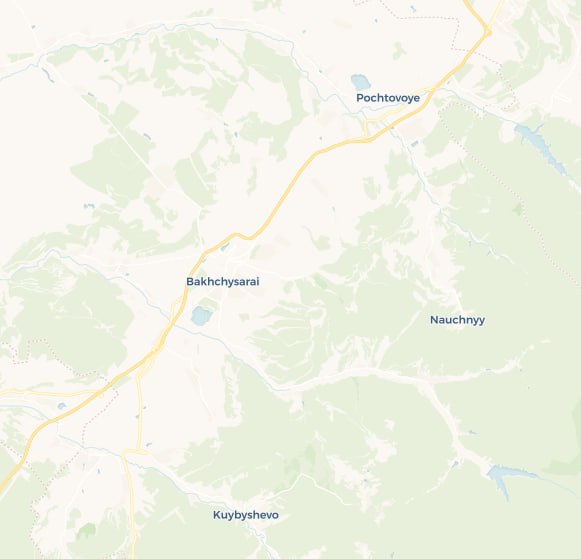
Residents reported power outages lasting more than a day in occupied Crimea’s Bakhchysarai district after the 220 kV Bakhchysarai substation was hit on July 5. Power has reportedly been restored, but internet remains down and mobile service is still heavily disrupted.
NASA FIRMS detected overnight fire signatures in occupied Crimea and nearby waters, including near the Saky area, the 330 kV Zapadno-Krymska substation, and an S-400 position. Offshore heat signatures were also recorded near Kerch and west of Crimea.
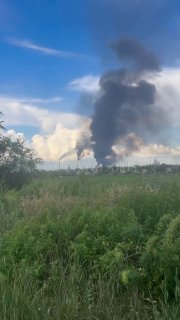
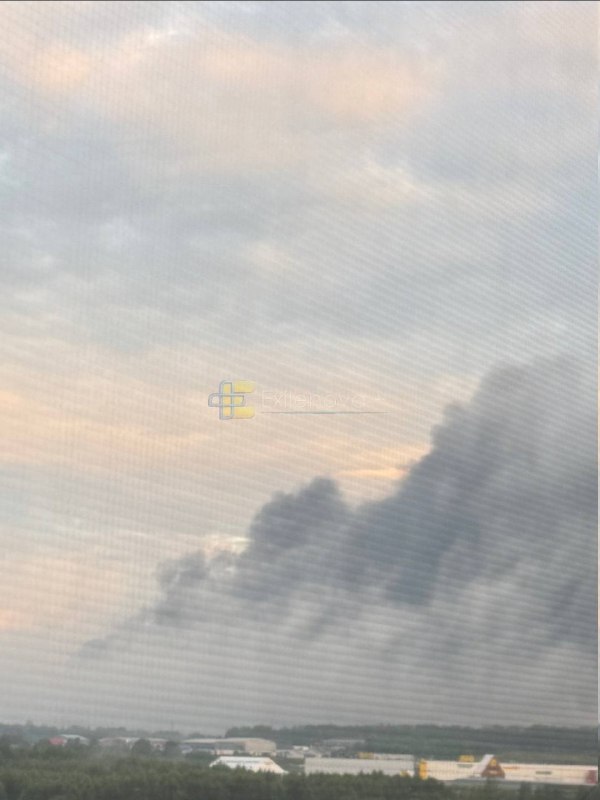
NASA FIRMS data shows active fires at the AVT-10 and AVT-11 processing units of the Omsk Oil Refinery following the Ukrainian long-range drone strike.
NASA FIRMS fire detection data shows ongoing fires in occupied Crimea at the Kerch seaport, near the 330 kV Simferopol substation, and at Hvardiiske airbase. The data indicates active fire hotspots at all three locations. Ukrainian drones were active previous night.

The pendulum system featured by Laibin Seismic is an advanced base-isolation technology designed to protect buildings during earthquakes. It decouples the structure from the ground, allowing the building to sway safely while gravity acts as a restoring force to return it to centerScience and facts💡
NASA FIRMS data shows multiple fires in occupied Crimea today, including at the Novotroitska wind power plant, the military airfield in Dzhankoi and the ferry terminal area in Kerch. No damage assessment was provided.

1959 computer "drawing" a flag 🇺🇸Science and facts💡
❗️Onet reports Poland’s failed MiG-29 drone-tech exchange with Ukraine stalled over the aircraft’s condition and the cost of modernization. Ukrainian teams inspected 14 Polish MiG-29s in Malbork and found them heavily worn, especially the landing gear, then asked Warsaw to fund repairs and upgrades. Poland rejected the demand and later tied the impasse to the absence of Ukrainian drone-technology ...
NASA FIRMS detects fires at five electrical substations in occupied Crimea. The affected sites are listed as Maryanovka 220/35/10 kV, Belogorsk 110/35/10 kV, Saky 110 kV, Dzhankoi 330 kV, and Staryi Krym 110/35/10 kV. Power outages are reported by locals.
NASA FIRMS detects fires at five electrical substations in occupied Crimea. The affected sites are listed as Maryanovka 220/35/10 kV, Belogorsk 110/35/10 kV, Saky 110 kV, Dzhankoi 330 kV, and Staryi Krym 110/35/10 kV. Power outages are reported by locals.
While Russians are trying to pass it off as AI footage, satellite imagery shows a huge long fuel queue near Chita. The line is visible from orbit and appears barely moving.
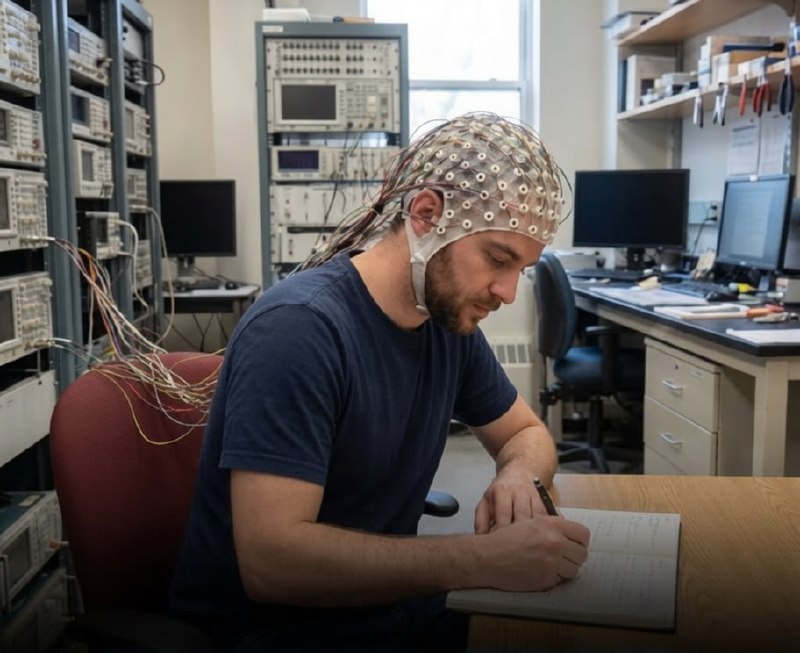
Yes: handwriting still matters.A new study has confirmed that writing by hand activates far more complex and widespread neural networks in the brain than typing, underscoring its importance for learning and memory.Researchers at the Norwegian University of Science and Technology used a high-density EEG cap with 256 electrodes to record brain activity in university students. They found that the int...

The strongest material in the universe. The most durable and at the same time lightweight material in our universe is graphene. This is a carbon plate, the thickness of which is just one atom, but it is stronger than diamond, and its electrical conductivity is a hundred times higher than that of silicon in computer chips.Science and facts💡

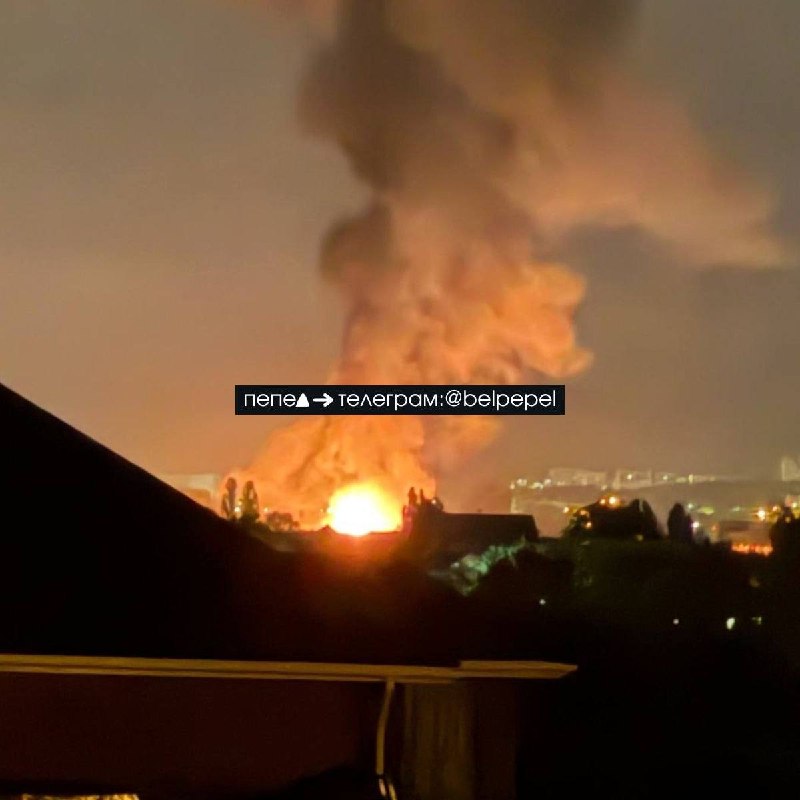
Ukrainian FP-2 drones struck occupied Donetsk overnight, triggering a large fire. NASA FIRMS data shows major fires burning at a truck depot in Donetsk after the attack.