Latest news

Noel Reports · World · before 2 meat.

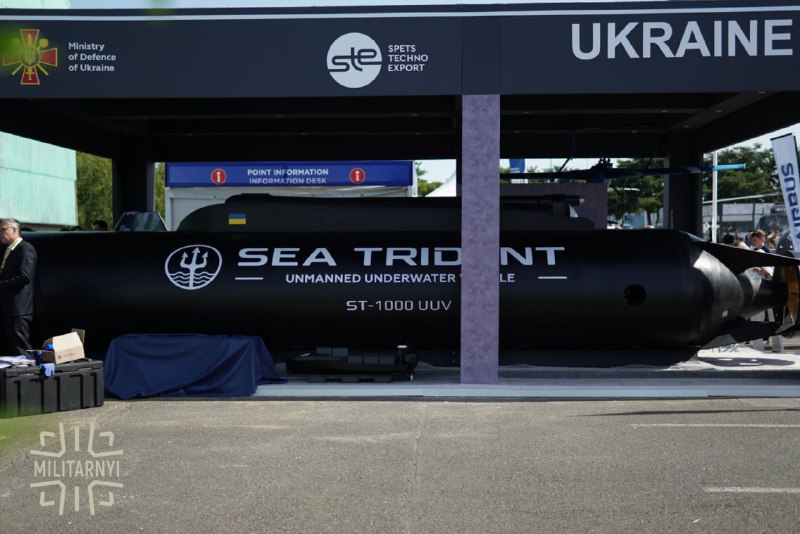
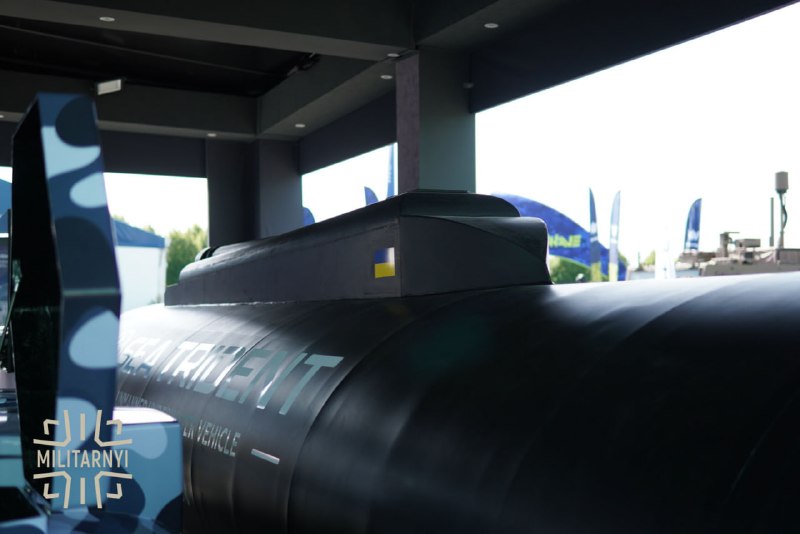
Ukraine also unveiled the Sea Trident heavy underwater drone at Eurosatory in Paris.

Ukraine also unveiled the Sea Trident heavy underwater drone at Eurosatory in Paris. Developed by Global Mark, the autonomous low-visibility system is designed for strike missions, cargo delivery and interception of other unmanned underwater vehicles. It can carry a 1,000 kg payload, travel up to 2,000 miles and operate at depths of 60 meters.

Leak Live · · before 2 meat.

⚠️WARNING: GRAPHIC CONTENT ⚠️🇵🇱 Bardo, Poland — A speeding SUV driver mowed down a 48-year-old father and his 9-year-old son on a sidewalk, killing both.The driver later claimed he remembered nothing and pleaded not guilty 👀Follow us -> LiveLeak

⚠️WARNING: GRAPHIC CONTENT ⚠️🇵🇱 Bardo, Poland — A speeding SUV driver mowed down a 48-year-old father and his 9-year-old son on a sidewalk, killing both.The driver later claimed he remembered nothing and pleaded not guilty 👀Follow us -> LiveLeak

Noel Reports · World · before 2 meat.

Ukraine’s state defense industry unveiled the new UAV-290 strike drone at Eurosatory 2026.

Ukraine’s state defense industry unveiled the new UAV-290 strike drone at Eurosatory 2026. The turbojet-powered system is designed for autonomous attacks on fixed ground targets, carries a 100 kg warhead and has a range of up to 650 km. The drone reaches speeds of 800 km/h and launches from a ground-based platform using a solid-fuel booster.

Noel Reports · · before 2 meat.

Ukrainian drones struck the Azot chemical plant in Novomoskovsk, Tula region, before dawn on June 14.

Ukrainian drones struck the Azot chemical plant in Novomoskovsk, Tula region, before dawn on June 14. Magyar said the 1st Separate Unmanned Systems Center and 9th Kairos Battalion of the 414th Brigade “Magyar’s Birds” operated jointly with SSO, HUR and other Ukrainian deep-strike components. The plant produces nitric acid, acetic acid, ammonium nitrate, methanol, argon and other industrial materia...

Noel Reports · World · before 2 meat.

UNESCO condemned the June 15 strike on Kyiv-Pechersk Lavra, part of the World Heritage property “Kyiv: Saint-Sophia Cathedral and Related Monastic Buildings, Kyiv-Pechersk Lavra.” The organization said the Dormition Cathedral and nearby historic structures were damaged.

UNESCO condemned the June 15 strike on Kyiv-Pechersk Lavra, part of the World Heritage property “Kyiv: Saint-Sophia Cathedral and Related Monastic Buildings, Kyiv-Pechersk Lavra.” The organization said the Dormition Cathedral and nearby historic structures were damaged.

Science Facts · Environment · before 2 meat.

Since 1978, China has been carrying out one of the most ambitious ecological projects in human history: the Three-North Shelter Forest Program, often called the Great Green Wall.The goal is to halt the relentless advance of the Gobi and Taklamakan deserts. So far, China has planted more than 66 billion trees along a 2,800-mile (4,500 km) stretch. The government plans to plant another 34 billion trees by 2050, which could increase global forest cover by roughly 10% compared to late-1970s levels.The project was launched to combat severe soil erosion and the massive dust storms that have plagued northern China, including Beijing, for decades. Officials recently celebrated a major milestone: successfully encircling the Taklamakan Desert, helping raise the country’s overall forest coverage above 25%.Satellite observations and climate models show that these vast planted forests have already begun to alter local weather patterns by influencing the atmospheric water cycle in northern and western China.However, the project faces significant criticism. Much of the planting has relied on monocultures of fast-growing species like poplar and willow. These artificial forests lack biodiversity and have proven highly vulnerable to disease, in one province alone, over a billion trees were lost to pests. Additionally, planting water-hungry trees in arid regions has dramatically lowered groundwater levels, caused widespread tree die-off, and in some cases may have worsened desertification.As the program continues, many scientists are calling for a shift toward more diverse, native tree species that are better adapted to dry conditions and can survive long-term without depleting the region’s scarce water resources.Science and facts💡

Since 1978, China has been carrying out one of the most ambitious ecological projects in human history: the Three-North Shelter Forest Program, often called the Great Green Wall.The goal is to halt the relentless advance of the Gobi and Taklamakan deserts. So far, China has planted more than 66 billion trees along a 2,800-mile (4,500 km) stretch. The government plans to plant another 34 billion tr...