A firefly species unseen since 1983 has been rediscovered in the United States.Known as the similar firefly (Pyractomena similis), the insect turned up this spring in both Virginia and Delaware after going more than four decades without a confirmed scientific record. In Delaware, Delaware State University entomologist Christopher Heckscher spotted its distinctive light display at Brandywine Creek State Park, where males emit rapid strings of roughly 10 to 20 amber pulses, pause briefly, and then repeat the sequence. He observed around eight to 12 fireflies flashing this pattern, and microscopic examination later confirmed the species.An independent sighting had already occurred earlier in Ashburn, Virginia, where researcher Aljoscha Nern documented the insect on the citizen science platform iNaturalist, with that identification also verified under a microscope. In Delaware, the discovery took place in a meadow left to grow naturally with shrubs and low vegetation. Heckscher suspects this undisturbed habitat is critical for the species, which typically favors fields and meadows near water.In conservation biology, being classified as "lost to science" does not mean a species has been declared extinct; rather, it indicates that the organism has gone without documented observations for an extended period. A recent review identified 28 firefly species across the United States and Canada as lost to science, though researchers suspect many have simply been overlooked due to a lack of targeted searches. Additional field surveys will now be necessary to determine how widespread Pyractomena similis truly is and how many individuals remain.["Rediscovery of the similar firefly (Pyractomena similis) and a review of lost firefly species in the United States and Canada," Journal of Lost Species (2026)]Science and facts💡
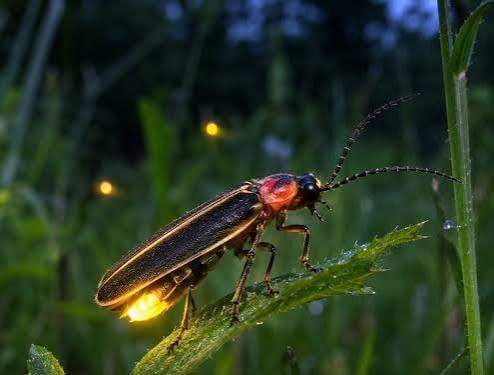
A firefly species unseen since 1983 has been rediscovered in the United States.Known as the similar firefly (Pyractomena similis), the insect turned up this spring in both Virginia and Delaware after going more than four decades without a confirmed scientific record. In Delaware, Delaware State University entomologist Christopher Heckscher spotted its distinctive light display at Brandywine Creek State Park, where males emit rapid strings of roughly 10 to 20 amber pulses, pause briefly, and then repeat the sequence. He observed around eight to 12 fireflies flashing this pattern, and microscopic examination later confirmed the species.An independent sighting had already occurred earlier in Ashburn, Virginia, where researcher Aljoscha Nern documented the insect on the citizen science platform iNaturalist, with that identification also verified under a microscope. In Delaware, the discovery took place in a meadow left to grow naturally with shrubs and low vegetation. Heckscher suspects this undisturbed habitat is critical for the species, which typically favors fields and meadows near water.In conservation biology, being classified as "lost to science" does not mean a species has been declared extinct; rather, it indicates that the organism has gone without documented observations for an extended period. A recent review identified 28 firefly species across the United States and Canada as lost to science, though researchers suspect many have simply been overlooked due to a lack of targeted searches. Additional field surveys will now be necessary to determine how widespread Pyractomena similis truly is and how many individuals remain.["Rediscovery of the similar firefly (Pyractomena similis) and a review of lost firefly species in the United States and Canada," Journal of Lost Species (2026)]Science and facts💡
Comments
Be the first comment