A fashion designer is creating clothes to pollute databases built by ALPRs like Flock.Cybersecurity professional and designer Kate Rose developed clothing covered in fake license plates that can confuse automatic license plate readers, or ALPRs, the same broad category of surveillance technology used by companies such as Flock Safety.The idea exploits how these cameras interpret the world. ALPR systems scan images for rectangular shapes and combinations of letters and numbers that resemble license plates. When software thinks it has found one, it isolates the image, reads the characters, and can save the plate along with information such as the time and location where it was spotted.Rose realized that meant the system could potentially be tricked into recognizing plates that did not actually belong to vehicles. Her designs use repeating patterns made to resemble real license plates closely enough that some recognition systems may identify them as genuine.So instead of hiding a person from the camera, the clothing tries to create false detections. If the system logs those fake plates, they become junk data mixed in with legitimate vehicle records.That matters because networks of license plate readers can be used to build enormous databases showing where vehicles have been seen and when. Flock Safety, for example, operates camera networks used by police departments, neighborhoods, and businesses across the U.S.Rose’s project predates the current expansion of Flock cameras and was not designed specifically for the company. She presented the work at DEF CON in 2019 as an experiment in what is sometimes called adversarial fashion: clothing designed to exploit weaknesses in computer vision.Science and facts💡
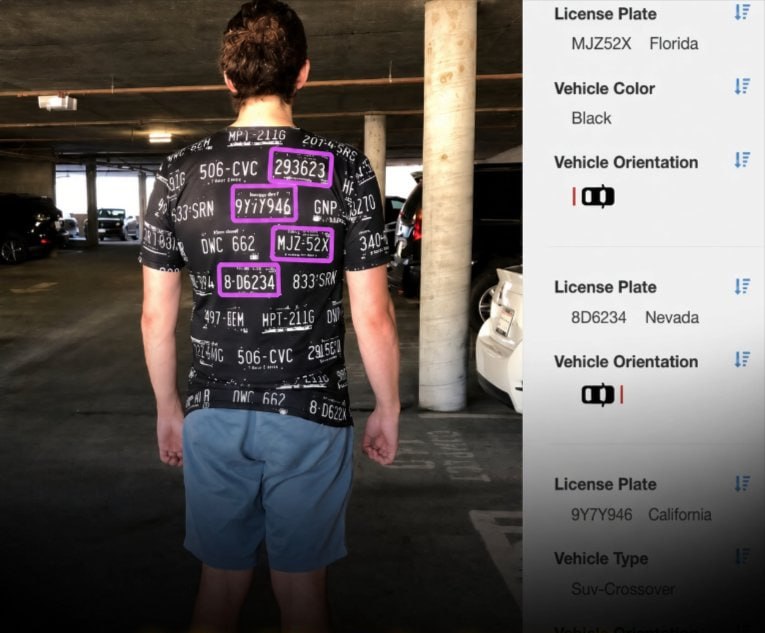
A fashion designer is creating clothes to pollute databases built by ALPRs like Flock.Cybersecurity professional and designer Kate Rose developed clothing covered in fake license plates that can confuse automatic license plate readers, or ALPRs, the same broad category of surveillance technology used by companies such as Flock Safety.The idea exploits how these cameras interpret the world. ALPR systems scan images for rectangular shapes and combinations of letters and numbers that resemble license plates. When software thinks it has found one, it isolates the image, reads the characters, and can save the plate along with information such as the time and location where it was spotted.Rose realized that meant the system could potentially be tricked into recognizing plates that did not actually belong to vehicles. Her designs use repeating patterns made to resemble real license plates closely enough that some recognition systems may identify them as genuine.So instead of hiding a person from the camera, the clothing tries to create false detections. If the system logs those fake plates, they become junk data mixed in with legitimate vehicle records.That matters because networks of license plate readers can be used to build enormous databases showing where vehicles have been seen and when. Flock Safety, for example, operates camera networks used by police departments, neighborhoods, and businesses across the U.S.Rose’s project predates the current expansion of Flock cameras and was not designed specifically for the company. She presented the work at DEF CON in 2019 as an experiment in what is sometimes called adversarial fashion: clothing designed to exploit weaknesses in computer vision.Science and facts💡
Comments
Be the first comment